Finding the perfect engagement ring can feel overwhelming! I remember when I started looking, I was completely lost in a sea of metals, styles, and prices. I wanted something beautiful and lasting, but I also had a budget to consider. After a lot of research and some personal experience, I've learned a few things that I'd love to share to help you make the best choice for your special someone.
Like many, I started by thinking about the metal. Of course, gold and platinum came to mind, but I also wondered about sterling silver. I had several sterling silver rings and necklaces, and I loved their look. The big question was: would a sterling silver engagement ring hold up over time? Was it a good choice for something meant to be worn every day, forever?
I was especially concerned about durability. I'm not the most careful person, and I knew the ring would be exposed to daily wear and tear. I worried about bending, scratching, and just generally damaging a softer metal like silver. I also wanted to make sure that any gemstones set in the ring would be secure, and I wasn't sure if sterling silver was strong enough for that.
I started digging a little deeper and quickly discovered that sterling silver can actually be a great option, especially for a simpler design. I learned that a plain sterling silver band, without any gemstones or with gemstones set in a bezel (where the stone is completely surrounded by metal), can last for quite a while. In fact, I heard stories of couples who wore sterling silver rings for decades, and they held up just fine! The key, it seemed, was to choose a wider band—at least 3mm wide—to give it more strength.
However, I also realized that sterling silver isn’t indestructible. My own experiences with silver rings confirmed this. Over the years, some of my favorite silver rings have become a bit misshapen, with small dings and dents. While I still loved them, I understood that if I wanted an engagement ring that would truly last a lifetime, I might need to consider something more durable. This made me think about other options like gold, particularly 9k gold, which is more affordable than higher karats but still offers good durability.
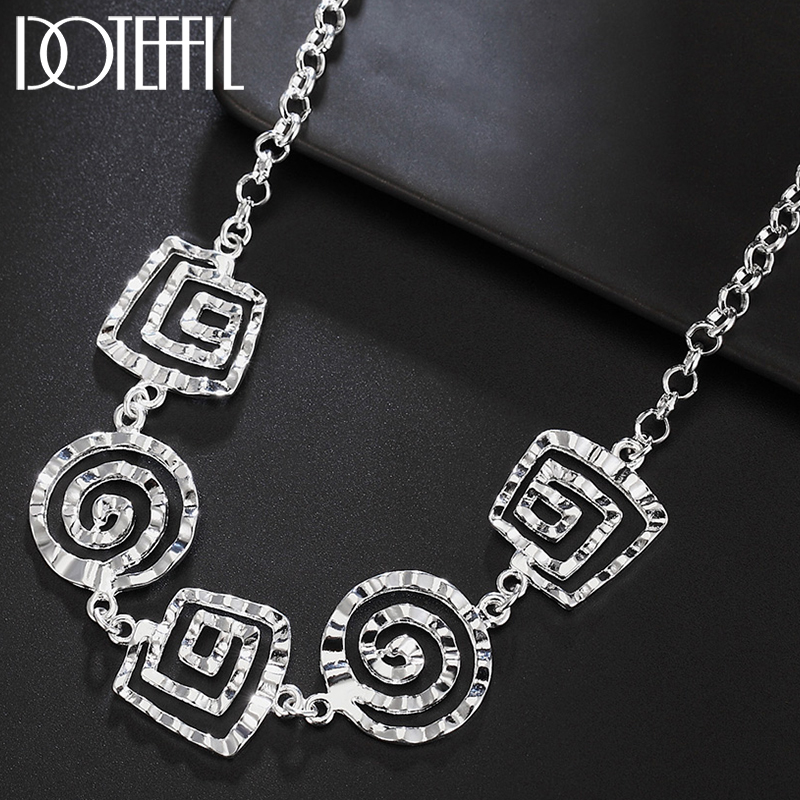
That's when I discovered Sumsfashion's homepage, and they had a beautiful selection of rings in different metals, and I started to think about necklaces too. I remember seeing this beautiful DOTEFFIL 925 Sterling Silver 20 Inch Hollow Thread Pendant Necklace. I thought, what a great gift idea! It’s elegant, affordable, and would definitely make someone happy.
I decided to explore gold options. I learned that gold is a very soft metal in its purest form (24k). That's why it's usually mixed with other metals to make it stronger and more durable. The karat number indicates the percentage of gold in the alloy. For example, 18k gold is 75% gold, while 14k gold is about 58% gold. Lower karat gold, like 9k, contains an even smaller percentage of gold and is therefore more resistant to scratching and bending.
Plated jewelry was another consideration. I learned that plated jewelry, where a thin layer of gold is applied to a base metal, isn't the best choice for long-term wear. The gold plating can wear down over time, exposing the base metal underneath. While the underlying metal may be structurally sound, the worn-off plating can ruin the look of the jewelry.
Based on my research and experience, here are some practical tips to help you choose the right metal for your engagement ring: